Execution Without Change
Organisations don’t usually struggle to get work done. They struggle to change what that work produces.
Stay in one organisation long enough and chances are you'll start to see the same pattern. A new or refreshed strategy is launched, usually with a push for faster decisions and fewer handoffs. Planning leads to a portfolio review and a reshuffled set of initiatives. Initiatives are translated into annual team and individual goals, and work begins.
Progress is visible everywhere - milestones are being hit and dashboards are mostly green. Governance is generally robust. Monthly updates are tight enough that few feel the need to challenge them.
But by the end of year one, decisions are no faster and trade-offs are no clearer. Silos remain unbroken. The organisation still behaves as it did before the work started. Senior leadership starts pushing for faster change. Attention turns to workshops, frameworks, and training designed to improve ways of working.
By the end of year two, employee confidence is starting to wane. Nothing has obviously failed. In fact, most of the work has been solid, even disciplined. Yet the outcome hasn’t materially changed. Fingers start pointing. Leaders feel frustrated at being let down by teams that haven't delivered.
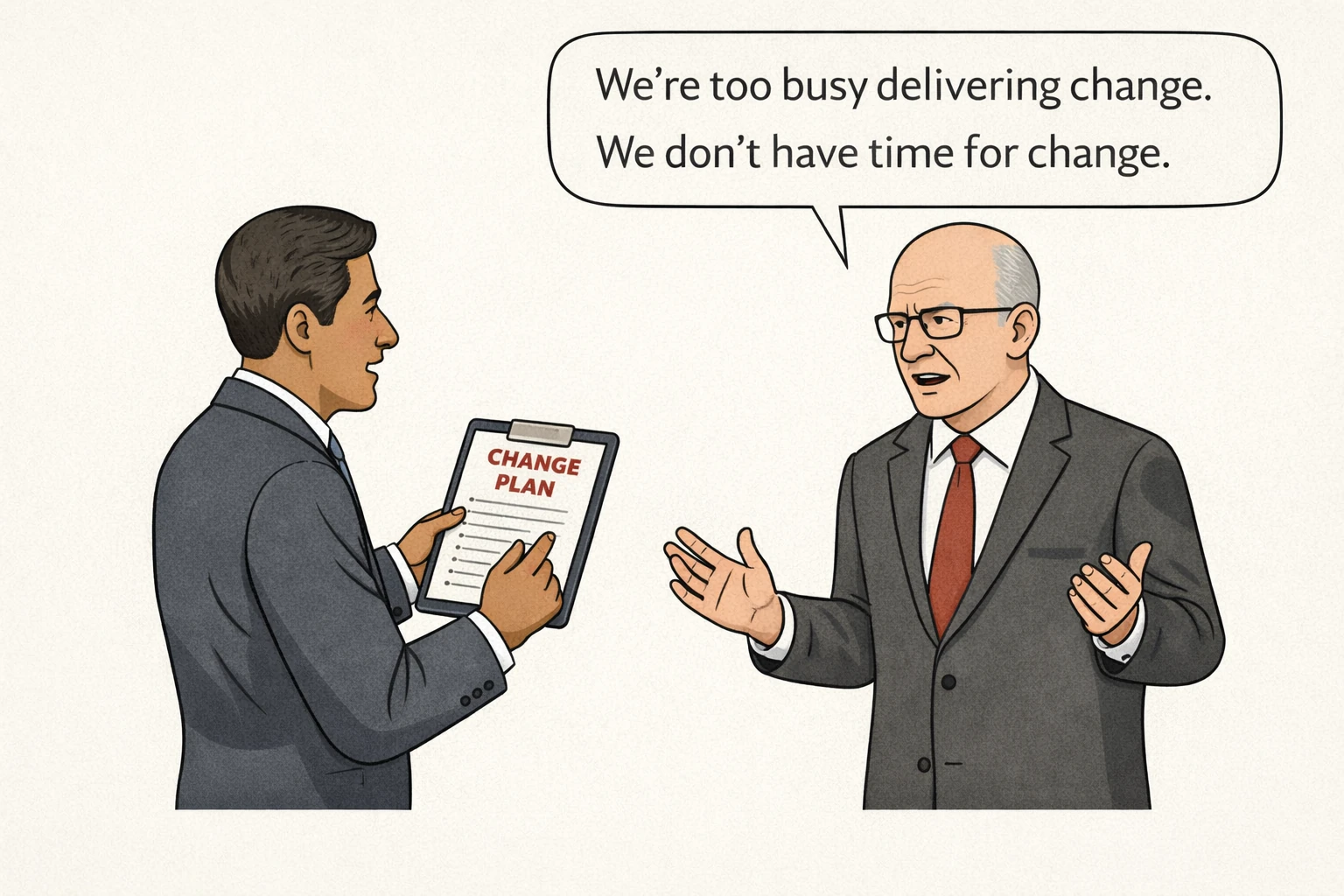
Delivery isn’t the problem. The organisation is executing exactly as designed. It’s just executing work the system can adapt around, while avoiding any real change.
Sometimes, this pattern is impossible to ignore.
A major transformation runs for years. Effort is abundant - governance forums, testing environments, stakeholder engagement, regular updates. At the same time, legacy operating practices remain in place while leaders pursue quick wins and lower-risk initiatives, leaving the harder changes untouched.
Deadlines move. Assurance layers increase. Eventually, work pauses so the design can be revisited.
From a distance, it looks like a delivery problem. Up close, it’s exactly what the system was built to do.
The system has been busy. It just hasn’t been changed.
Turning the Dial Up
When delivery is seen as the problem, the temptation in moments like this is to re-examine the work, and then turn the dial up.
Add more initiatives to increase momentum. Layer on more governance and visibility so progress can be seen and direction controlled. Tighten accountability and ownership to ensure everything gets done. Bring in other parties to assess the work.
Are we delivering it properly? Are we prioritising the right things? Is execution strong enough?
That instinct makes sense. It’s also where most organisations stop.
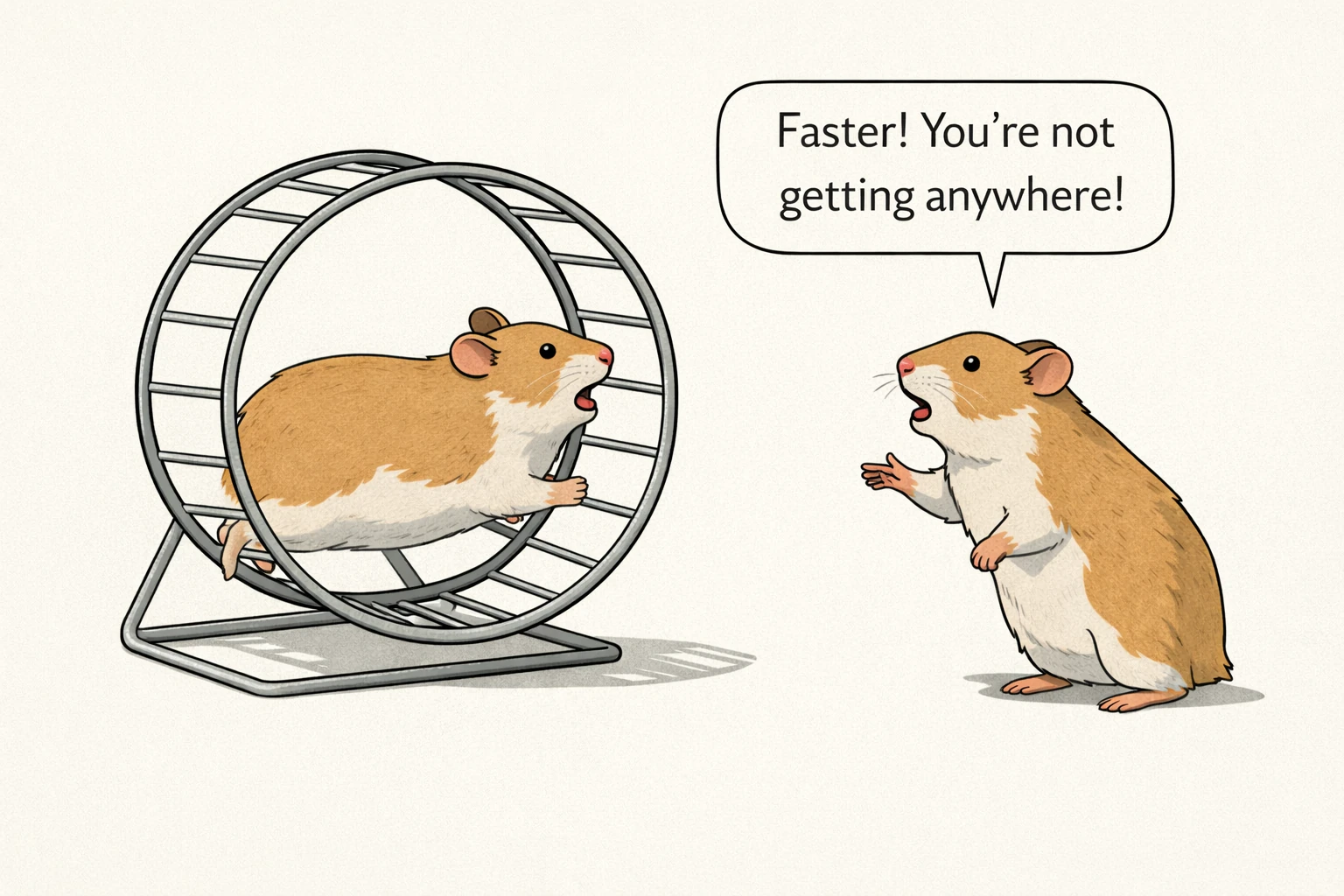
The harder realisation is that the issue isn’t the volume of work - it’s that the work is skirting around the system itself. Initiatives only change organisations when they alter the system or the conditions it operates within.
If that system still rewards the same behaviours and manages trade-offs the same way, the outcome is already decided before the work even begins.
Which means the more useful question isn’t whether the work is being delivered. It’s what the system is currently designed to produce.
And whether anything in that design has actually changed.
Change the Conditions
Outcomes don’t come from the volume of work delivered. They come from how the organisation makes decisions, allocates resources, and handles trade-offs - especially when under pressure.
Initiatives sit inside that setup. They’re constrained by it.
If incentives still favour short-term delivery, that’s what will dominate. If authority remains concentrated in the same places, decisions will continue to follow the same paths. If trade-offs are still avoided or quietly deferred, the organisation will keep defaulting back to the same outcomes.
In that context, more activity doesn’t create movement. It disappears into the system.
This is why the real work of change is less about what gets launched, and more about what gets rewired.
Change happens when the conditions for how work is delivered are altered.
These focus areas aren’t additional work. They are choices about what to change - in incentives, authority, governance, and trade-offs - so that different outcomes become possible.
1. Be stricter about what gets funded
- Fund against the outcome you want - most organisations fund what’s easiest to defend, not what actually changes outcomes.
- Don’t mistake a well-presented initiative for one that will materially shift performance, decisions, or results.
- Be alert to halo effects - familiar winners, confident sponsors, and previously successful teams often attract funding more easily than the work itself warrants.
- Ask what this investment is reinforcing, not just what it will deliver.
- Be willing to stop or deprioritise respectable work that is consuming time and capital without moving the outcome.
- If funding patterns stay the same, the organisation will keep producing the same result.
2. Resolve structural conflicts before adding more work
-
Identify where the system is asking for opposing outcomes, such as:
- short-term performance vs long-term capability
- control vs speed
- investment vs cost reduction
- innovation vs risk containment
-
Make an explicit call on which side wins - otherwise the system will decide for you.
-
Do not launch initiatives into unresolved trade-offs - they will be absorbed.
3. Change what gets reinforced before asking for new behaviour
- Start by confronting the gap: what’s said to matter vs what gets backed under pressure. They’re rarely the same in practice.
- Look at what consistently wins in the room: what gets praised, fast‑tracked, escalated, protected - and what gets deprioritised.
- Change those signals in the moments that count (exec forums, governance gates, performance discussions), not in comms or training.
- Be explicit about the contradiction: stop praising one thing while rewarding another. It happens more often than most leaders realise.
- Separate this from funding: funding decides what enters; reinforcement decides what survives and scales.
- If these signals don’t change, people will follow them - not the message or the memo.
4. Reallocate authority to match the outcome you want
- Surface where decisions are actually being made today - formal authority often sits in one place, while day-to-day control sits elsewhere
- Look at where decisions are escalated, overridden, or delayed - these patterns show where authority actually sits
- Align decision rights with where the outcome is created, not where risk or hierarchy has historically concentrated power
- Expect resistance - shifting authority alters control, visibility, and accountability, not just the process.
- Until decision rights change, outcomes will continue to follow existing priorities, regardless of intent
5. Remove work that reinforces the current system
-
Actively stop initiatives that:
- optimise local performance at the system’s expense.
- make the current way of working easier to continue.
-
This is often more impactful than launching new work.
-
If everything stays, nothing changes.
Questions That Cut Through
These are the kinds of questions to use in executive forums - strategy discussions, initiative approvals, even performance reviews - to cut through a polished update and get to what will actually change.
- “Assuming strong execution, what in our current setup would still limit this from changing the outcome?”
- “What will be materially different in how this organisation operates if this works?”
- “After this, what becomes easier to do, and what becomes harder?”
- “What are we consciously trading off to get a different result, and what are we saying no to?”
- “Six to twelve months in, what would we see that tells us this has genuinely changed something?”
Leadership isn’t about driving more activity. It’s about deciding what the system will allow.
Most organisations don’t lack initiatives. They have more than enough. What they lack is alignment between what they say matters and what their system actually produces.
Until that shifts, more work will continue to look like progress while leaving outcomes unchanged.
In the end, organisations don’t behave according to what they intend. They behave according to what their systems make possible.
This article is the final in a series exploring why organisations struggle to measure impact and what it takes to design work that actually produces meaningful outcomes.
Impact Measurement Series