Organisations often believe change fails because people resist it. In practice, many initiatives struggle because the surrounding system gradually restores the behaviour it was designed to produce.
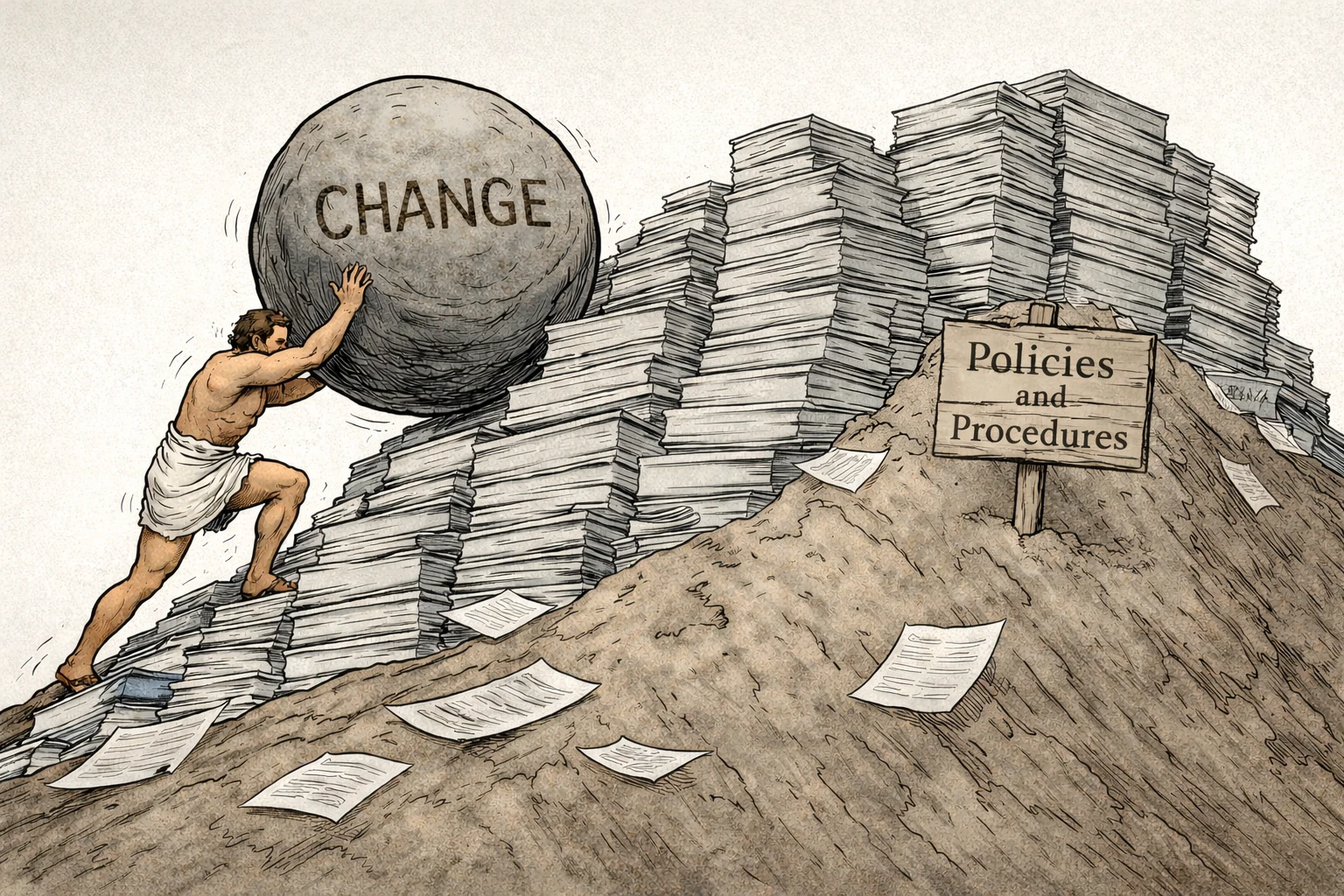
I’ve seen several organisations attempt the following transition over the years: moving from activity-based working to outcomes-based working.
The instigator is usually the same. Years of activity-driven delivery have produced an uncomfortable pattern: large programs of work are completed, yet the outcomes those programs were meant to achieve remain elusive. Funding and resources are being stubbornly funnelled into programs that aren’t delivering results.
A cross-functional team is assembled to drive the transition. Strategy, reporting, performance management, and leadership capability are all brought into the conversation. Early discussions are considered and collaborative.
The first signs of trouble appear when the team attempts to define what an “outcome” actually means. The debate is robust. Some worry about pushing the organisation too far too quickly. Others feel a strict definition will become bureaucratic. Eventually the group agrees to stay pragmatic and avoid over-engineering the concept.
Then, when it comes to planning the work, outcomes are sidelined faster than a veggie-platter at a children’s birthday party. This is most noticeable in the leadership capability workstream.
What begins as a program to help leaders design work around outcomes is gradually reshaped and reduced to a briefing session to explain upcoming process changes. Reasons for this vary, but common themes are leaders being busy, training budgets being tight, and that year one should focus on awareness rather than behaviour change.
The project is declared a success, and the transition to outcomes-based working has officially begun.
But in the end, the most material change appears in the performance management system: “Goals” are relabelled “Outcomes.”
In previous articles I’ve covered how intent often drifts as it cascades, and how if intent isn’t embedded at the design stage it can lead to deliverables that don’t achieve the desired outcome.
In the example above, the initiatives started with the right intent – the organisations genuinely wanted to move towards outcomes-based working. But it failed because the surrounding system absorbed the change without altering the conditions that produced the problem in the first place.
In other words, the system rejected the change.
Recognising the Pattern
Most teams recognise the moment when a change initiative begins to change shape — usually when the work starts sounding more practical and manageable than it did at the start.
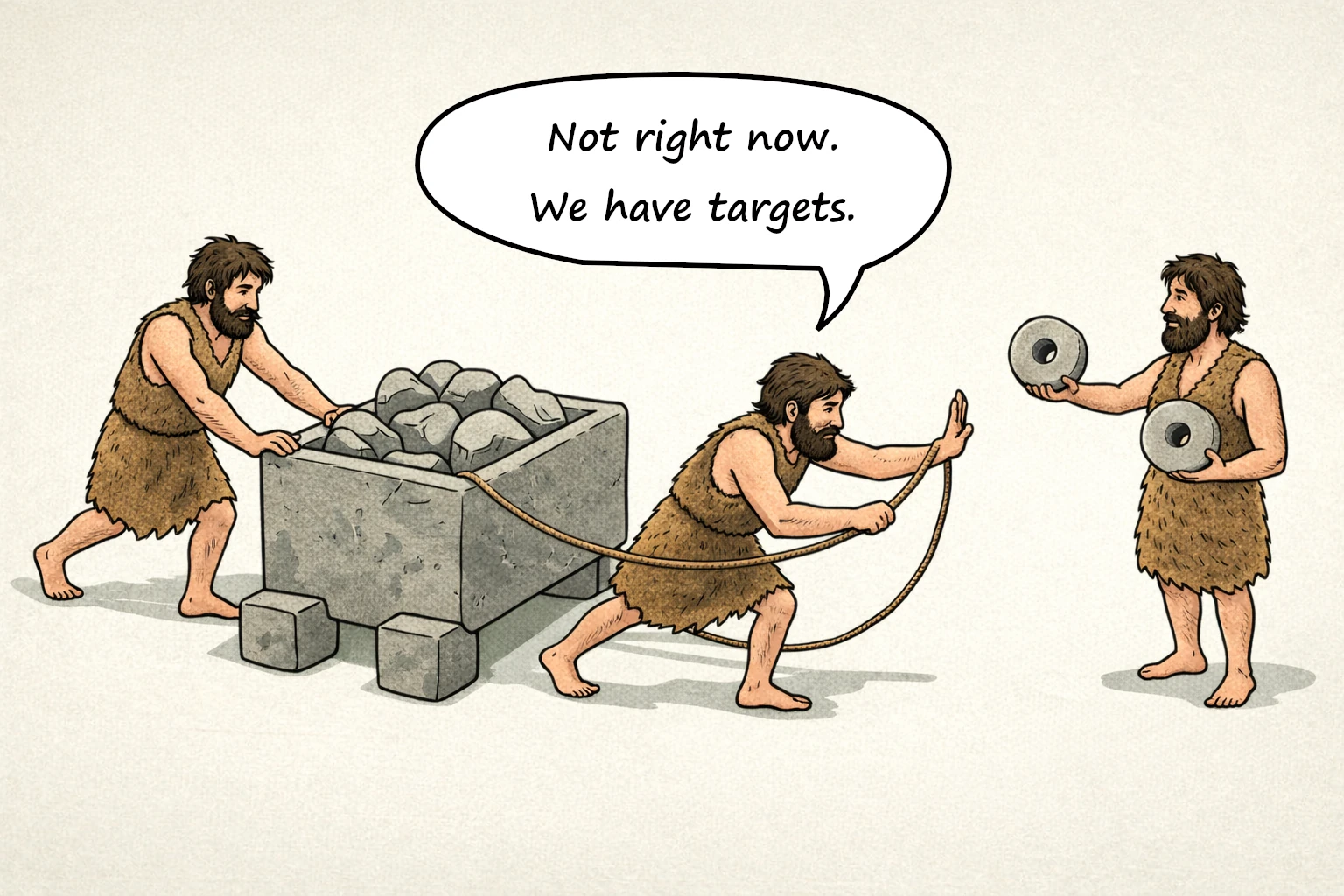
It happens gradually, but before long, small signals begin to appear. An ambitious element of the design is postponed. A structural change becomes a "later phase." Capability work is reduced to awareness.
Each adjustment sounds reasonable. Taken together, the initiative starts to look subtly different from the one originally imagined.
By the time the initiative reaches rollout, it often arrives in a reduced form, with many of the original conditions removed. What usually follows is a familiar interpretation of why the change didn’t fully land.
Perhaps the initiative simply lost momentum in the business. Perhaps the organisation had too many competing priorities to sustain the change. Perhaps people slipped back into familiar ways of working. Or the old favourite — the organisation was experiencing "change fatigue."
When you look back at how the initiative was reshaped along the way, a different pattern becomes visible. The issue is rarely motivation or dedication. The system has simply steered the work back toward the conditions it already understands.
Organisations are remarkably good at preserving these conditions.
Why Organisational Systems Restore Equilibrium
The interesting question is why this happens so reliably.
Most organisational systems are built for consistency, efficiency and reliability. These are qualities large organisations rely on in order to operate at scale. Incentives reinforce delivery against predefined targets. Governance structures exist to reduce risk. Budget cycles favour initiatives that can show progress quickly. Decision rights are arranged so that consequential changes move slowly and visibly through layers of approval.
All of these mechanisms exist for good reasons: they make large organisations manageable and performance monitorable by setting expectations around how and what work is performed.
This also means they shape what kinds of change the organisation can comfortably absorb.
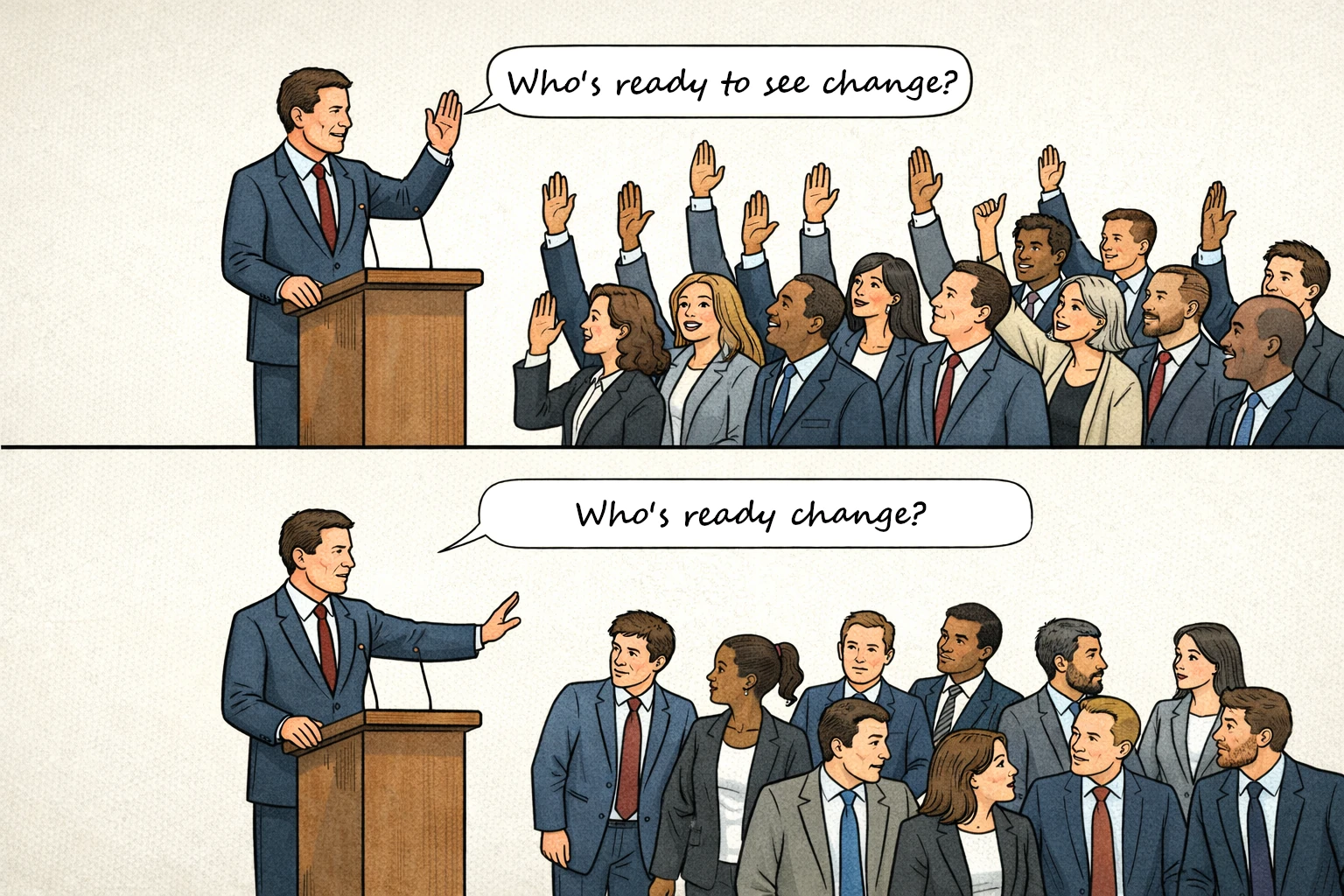
When an initiative proposes altering the conditions that drive behaviour — incentives, authority, resource allocation, reporting expectations — it begins to collide with the mechanisms designed to keep the organisation operating smoothly. The system does not always resist vocally. It just begins redirecting the work.
Changes that threaten the earning of incentives are deferred. Structural adjustments are softened so they fit within current governance arrangements. Work that might disrupt delivery is postponed until a more convenient moment.
These decisions are hard to challenge at the time because, individually, the rationale sounds prudent. However collectively, they steer the initiative back toward the conditions the organisation already understands.
The system is not rejecting the change out of hostility. It is restoring the balance it was designed to maintain.
The Subtle Ways Systems Neutralise Change
This restoration rarely happens through open disagreement; it usually happens through compromise. Not all compromises are bad. They become a problem when collectively they gradually reshape the initiative into something the existing system can comfortably absorb. This is why keeping intent visible through outcomes is critical.
There is rarely a "good" time to be driving change in an organisation; certain conditions are remarkably consistent across organisations:
- The organisation is busy.
- Leaders are under pressure.
- Budgets are finite.
- The change must remain practical.
As a result, adjustments are usually justified in reasonable language:

- Ambitious goals are softened as the business doesn't have the capacity to absorb too much change.
- Structural changes are disruptive, and are diluted or postponed to a future phase when the business has "more capacity".
- Significant capability work costs time and money. Awareness sessions can be run much more quickly and cheaply, while capability building is pushed into a future leadership program.
- Concepts are renamed rather than operationalised.
In the absence of clear outcomes, these decisions are hard to challenge. Even retrospectively they can be seen as justified, since the organisation has still introduced visible changes — new terminology, revised reporting templates, perhaps a redesigned dashboard.
The deeper conditions that produced the original behaviour remain largely intact.
The system has adapted just enough to appear responsive.
Why Leaders Misdiagnose the Failure
When the expected outcomes fail to materialise, the explanation usually focuses on execution.
People resisted the change. Leaders lacked discipline. The organisation needed stronger accountability.
These explanations feel plausible because the initiative did deliver activity. Training sessions were run. New processes were launched. Progress reports showed movement.
From the vantage point of those reports, the work appears to have been implemented.
What those artefacts rarely reveal is whether the structural conditions that shape behaviour actually changed. Incentives, authority, and decision rights tend to sit outside the scope of most initiative dashboards, even though they are often the most consequential elements.
As a result, organisations end up measuring delivery against the initiative plan rather than against the system that determines whether the initiative can realistically succeed.
The project may have run exactly as designed.
In a previous article I explored how success narratives quietly reshape organisations. This is one example of that dynamic. Over time, the story simplifies. The visible activity becomes the evidence of success, while the absence of deeper impact is attributed to employees being change-resistant.
What disappears from the narrative is the underlying reality: the initiative had already been reshaped so that the system could accommodate it without changing the conditions that produced the original behaviour.
When Impact Depends on the System
When you look back on these initiatives with the original outcome in mind, it becomes clear that the problem was never the project plan.
The work may have been well designed. The rollout may even have been executed competently. Yet the organisation continues to behave much as it did before.
When leaders evaluate the initiative against the outcome it was meant to achieve, the system becomes much clearer.
In large organisations, behaviour rarely changes because a program asks it to. Behaviour changes when the conditions surrounding the work change.
If incentives still reward delivery against predetermined targets, people will continue to prioritise those targets. If budgets remain tied to existing activity, teams will continue protecting those activities. If decision authority still sits within the same governance structures, consequential choices will continue to follow the same pathways.
The initiative can encourage people to think differently, but the system decides what behaviour still makes sense.
This is why impact so often depends on the design of the surrounding system rather than the quality of the initiative itself.
Once leaders see this dynamic, the conversation begins to change. The question is no longer how to deliver the initiative. The more useful question becomes whether the conditions that shape behaviour have been deliberately addressed.
A few practical questions tend to expose the difference quickly:
- What behaviour would someone need to change for this initiative to achieve its outcome?
- Which incentives, metrics, or reporting expectations currently reward the opposite behaviour?
- Does the authority to implement the change sit with the people expected to deliver it?
- What would actually need to change in priorities, resources, or ways of working for the outcome to be achieved?
These questions shift attention away from activities and toward the conditions that produce behaviour.
That shift is often the moment an initiative stops operating inside the system and starts redesigning it.
The Realisation Leaders Eventually Reach
Organisations often begin change efforts assuming the challenge lies in motivating people.
More communication. More capability building. More emphasis on accountability.
Sometimes those efforts help at the margins. More often they leave leaders puzzled about why the organisation continues to behave in familiar ways despite considerable effort to change it.
The explanation is usually simpler than expected: systems are extraordinarily good at restoring equilibrium.
If the incentives, authority structures, and resource flows that shape behaviour remain intact, the organisation will gradually return to the patterns those structures produce.
Which means the real work of change is rarely launching the initiative - it is redesigning the system that decides what behaviour makes sense.
Because if the system remains unchanged, it will eventually remind everyone what it was built to do.
This article is part of a series exploring why organisations struggle to measure impact and what it takes to design work that actually produces meaningful outcomes.
Impact Measurement Series